
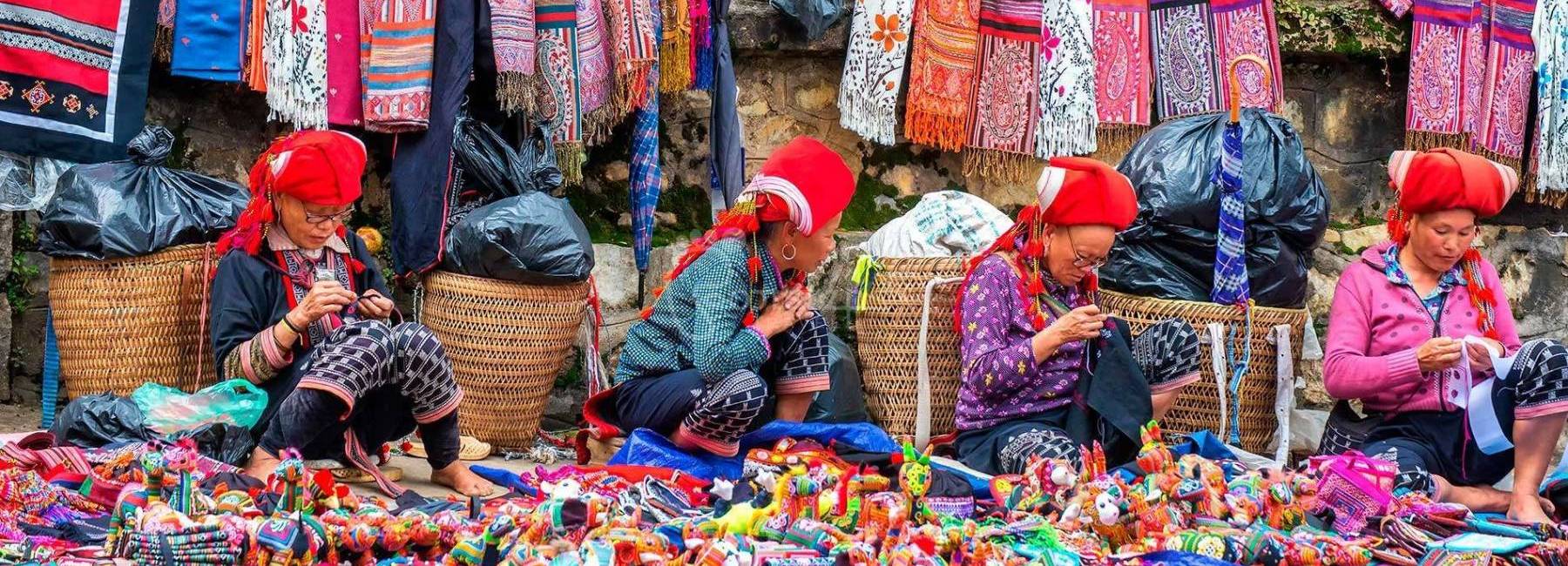
Bac Ha Sunday Market: A Vibrant Tapestry of Culture and Commerce in Northern Vietnam
While Sapa's Saturday night market draws crowds of international tourists, a more authentic and equally spectacular experience awaits those willing to venture further into the Vietnamese highlands. Bac Ha Sunday Market, located about 40 kilometers southeast of Sapa, stands as one of the most authentic ethnic minority markets in all of Southeast Asia. For travelers seeking genuine cultural immersion, colorful photographs, and unforgettable encounters with Vietnam's highland communities, this weekly gathering represents an absolute must-see experience that transcends typical tourism.
The Journey to Bac Ha: Part of the Adventure
The drive from Sapa to Bac Ha takes approximately two to three hours, winding through increasingly dramatic mountain scenery. This journey itself becomes part of the experience, as roads climb and descend through lush valleys, passing terraced rice fields and remote villages. The anticipation builds as your vehicle winds along mountain roads, offering glimpses of the diverse ethnic communities that inhabit this region.
Most visitors arrange their trip through local tour operators in Sapa, departing early in the morning to arrive at the market during peak hours. Some tours combine the market visit with additional activities such as visits to nearby ethnic villages, motorcycle rides through the countryside, or stops at local craft workshops. This flexibility allows visitors to customize their experience based on interests and energy levels.
The Market Itself: A Living Spectacle
Every Sunday morning, the small town of Bac Ha transforms into a vibrant cultural epicenter as ethnic minorities from surrounding villages converge for weekly trading. Unlike Sapa's Saturday night market, which has become increasingly commercialized and oriented toward tourist souvenirs, Bac Ha Sunday Market remains primarily a functional marketplace where locals conduct genuine business—buying and selling livestock, produce, textiles, and household goods.
The market sprawls across multiple areas, each devoted to different merchandise categories. The livestock section features horses, cattle, and other animals being negotiated with characteristic hand signals and shouted prices. The energy here is palpable—this is serious business where livelihoods depend on fair transactions and good prices. The horse trading section is particularly photogenic, with traditionally-dressed Flower Hmong and other ethnic minorities gathered in animated discussions around magnificent horses and ponies.
The textile and clothing section displays an dazzling array of traditionally-woven fabrics, intricately embroidered garments, and handcrafted accessories. Unlike mass-produced souvenir versions, these items are genuine traditional dress worn by the communities themselves. Women wearing elaborate traditional costumes—featuring complex embroidered patterns, multiple layers of colorful cloth, and distinctive headdresses—browse through textiles and clothing alongside tourists. The colors alone—brilliant reds, vibrant blues, rich purples, and golden yellows—create a visual feast that justifies the early morning wake-up call required to attend.
The produce and food sections reveal the agricultural reality of highland life. Farmers display fresh vegetables, herbs, rice, and grains grown in their mountain villages. Live chickens and ducks are bought and sold with remarkable speed. The spice section releases intoxicating aromas—turmeric, ginger, galangal, and numerous other herbs and spices that form the foundation of Vietnamese mountain cuisine. These sections feel unfiltered and authentic, capturing the essence of how highland communities actually provision themselves.
Cultural Diversity on Display
What makes Bac Ha Sunday Market exceptional is the concentration of Vietnam's ethnic minorities present on a single morning. The Flower Hmong people are particularly prominent, recognizable by their striking traditional dress featuring distinctive purple velvet fabrics and elaborate silver jewelry. However, Red Zao, Black Zao, Tay, and other ethnic groups also attend, each wearing traditional clothing that identifies their specific community and often their social status or marital status within their ethnic group.
These aren't costumes worn for tourists—they are the authentic daily dress of these communities. This distinction is crucial to understanding the market's appeal. You're not observing a staged cultural performance; you're witnessing genuine community life and commerce. The conversations, negotiations, and interactions happening around you are real, unscripted exchanges between people conducting their weekly business.
Observing how different ethnic groups interact—the trade networks that have developed, the mixed-ethnicity families evident in the crowds, the cooperative arrangements between different communities—provides invaluable insights into highland social dynamics. This is anthropology in real time, visible to anyone with eyes to observe carefully.
Photography and Visual Splendor
For photography enthusiasts, Bac Ha Sunday Market presents extraordinary opportunities. The combination of vibrant colors, diverse traditional costumes, dynamic human interactions, and morning light creates endless composition possibilities. The key to respectful photography is simple: ask permission before photographing individuals, show genuine interest in people rather than just their appearance, and consider purchasing items from vendors whose photographs you take—a fair exchange that benefits the community.
The market's landscape photography is equally stunning. The surrounding mountains, morning mist, and agricultural settings provide natural backdrops that enhance the human drama of the market itself. Arriving early ensures better light and fewer crowds, though the market remains crowded throughout the morning.
Shopping and Economic Impact
While cultural observation is the primary draw, the shopping experience at Bac Ha is genuinely rewarding. Prices are substantially lower than in Sapa, and the items are more authentically rooted in local production. Handwoven textiles, traditional clothing items, silver jewelry, and handicrafts represent genuine traditional arts rather than souvenirs mass-produced for tourists.
Purchasing items directly from vendors supports the economic wellbeing of these communities. Unlike mass-market tourism, these transactions represent a fair exchange where locals receive money for goods they've actually produced or grown. This direct economic benefit provides genuine incentive for communities to maintain traditional practices and languages.
Seasonal Variations and Planning
Bac Ha Sunday Market operates year-round, though seasonal factors influence the experience. Spring brings freshly-grown produce and the market's most vibrant energy. Summer offers lush countryside but can be hot. Autumn features clear skies and excellent visibility for photographs. Winter brings cooler temperatures and fewer crowds, though occasionally impassable roads due to weather.
The market is most crowded from approximately 8:00 AM to 11:00 AM, during which time it pulses with activity. Arriving early provides better access to vendors, fewer photographs containing other tourists, and cooler morning temperatures. Most visitors spend 3-4 hours exploring the market, though this can be extended if visiting villages or other nearby attractions.
Practical Considerations
Comfortable walking shoes are essential, as the market sprawls across uneven terrain and can be muddy depending on recent weather. Bringing cash is crucial—vendors primarily accept Vietnamese dong, and few accept credit cards. Small denominations are preferable for purchasing items. It's advisable to wear modest, respectful clothing and ask permission before photographing people, though most vendors are generally welcoming to tourists.
Conclusion: Authenticity in an Age of Tourism
In an increasingly homogenized world, Bac Ha Sunday Market represents something increasingly rare: an authentic cultural marketplace where tourism hasn't fundamentally altered the essential nature of the gathering. While awareness of tourists' presence is impossible to ignore, the market functions primarily as a marketplace serving local communities, not as a staged cultural attraction.
This authenticity is precisely what makes Bac Ha Sunday Market such a valuable travel experience. Unlike many tourism activities that feel constructed for visitors' consumption, this market offers genuine insight into highland life, real cultural diversity, and authentic human commerce. The memories formed here—the colors observed, the people encountered, the transactions witnessed—remain vivid long after returning home.
For anyone visiting Sapa, the short journey to Bac Ha Sunday Market is a worthwhile investment of time. It provides not just remarkable photographs and unique shopping opportunities, but genuine understanding of Vietnam's ethnic minority communities and their vibrant cultures. This is tourism at its best: educational, respectful, economically beneficial to local communities, and profoundly memorable.
Plan your trip
Tell us about your plans and one of our specialists will plan a unique trip for you...
MAKE AN ENQUIRY
You must have at least 4 photos to display slideshow.
Ideas for experiencingSapa
Experiences you have as you travel often hold the longest memories. As part of their research trips, our specialists seek out authentic ways to get to know Japan, and the best local guides. These activities reflect some of their best-loved experiences.