
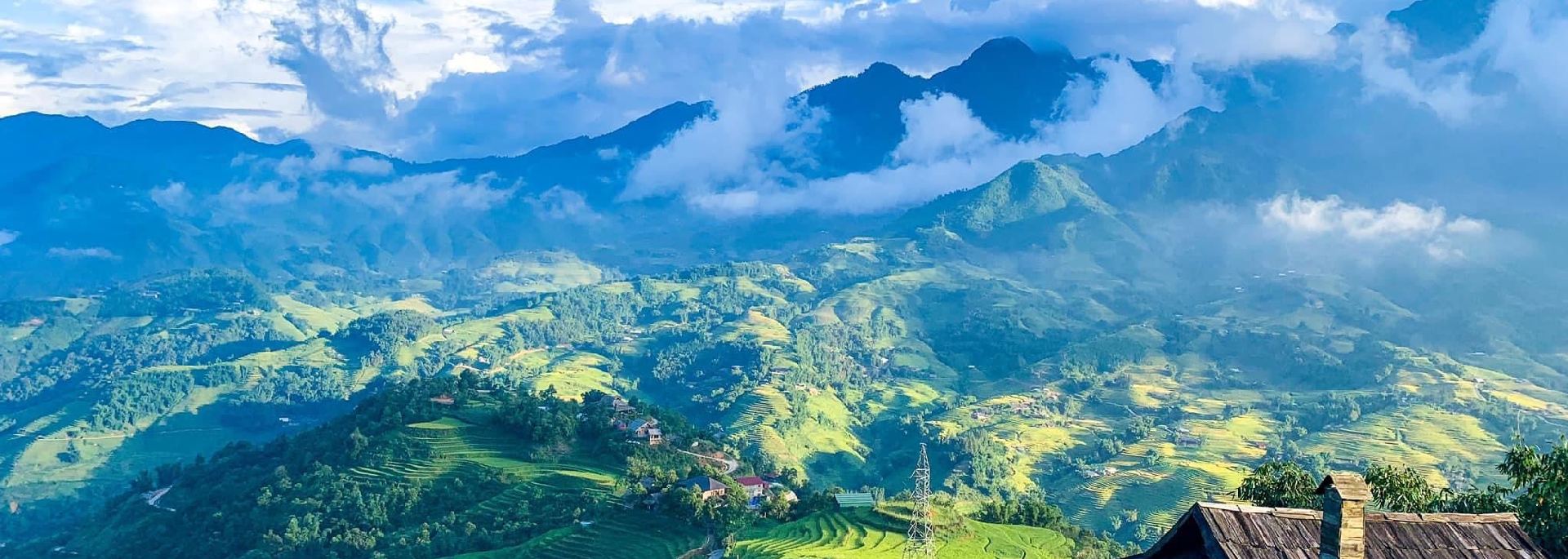
What to Do in Sapa: A Highlights Guide for First-Timers
Perched at 1,600 metres in the Hoàng Liên Sơn mountains of northwest Vietnam, Sapa is the kind of place that stays with you long after you've left. The mist rolls in without warning, the terraced hillsides glow emerald green or harvest gold depending on the season, and the warmth of the local Hmong and Red Dao communities is unlike anything you'll encounter in Vietnam's lowland cities.
For first-time visitors, the sheer variety of what Sapa offers — trekking, cultural immersion, highland cuisine, and mountain-top vistas — can feel overwhelming. This guide cuts through the noise and focuses on the experiences that genuinely matter. Consider it the distilled wisdom of those who know these mountains best: the local guides, village families, and seasoned travellers who have walked every trail and tasted every bowl of Thắng Cố.
- Distance from Hanoi: ~320 km northwest
- Travel time: 5–8 hours by bus or train
- Altitude: 1,600 m (town centre)
- Recommended stay: 3–4 nights minimum
- Best seasons: Spring & Autumn
Getting to Sapa from Hanoi
Most visitors arrive from Hanoi, and the journey itself sets the mood for the adventure ahead. The classic route is the overnight sleeper train from Hanoi to Lào Cai station — roughly eight hours through the northern Vietnamese countryside — followed by a one-hour minibus transfer up to Sapa town. It's unhurried, scenic, and lets you arrive rested. Reliable coach companies such as Sao Việt, HK Buslines, and G8 Sapa Open Tour offer comfortable limousine-style buses that make the journey in around six hours and are a popular option for budget travellers or those short on time.
Arrive on a weekday if your schedule allows. Weekends bring a significant surge of domestic tour groups to both Sapa and its surrounding attractions, making trails busier and accommodation pricier.
Local tip: Book your accommodation and any guided treks before departing Hanoi, especially if travelling between September and November. The peak harvest season sells out weeks in advance.
Choosing the right season
Every season in Sapa has its own distinct character, and none is truly "wrong" — but some are more rewarding for first-timers than others.
- Best for first-timers: Autumn (Sep – Nov)
The rice terraces ripen to a breathtaking golden-yellow. Weather is cool and clear, perfect for trekking. The most photographed season in Sapa, and for good reason.
- Great choice: Spring (Mar – May)
Peach blossoms cover the hillsides in pink and white. Days are pleasantly warm, skies are clear, and the valleys feel fresh and full of colour.
- Atmospheric: Winter (Dec – Feb)
Misty mornings, occasional frost, and rare light snowfall create a romantic stillness. Crowds are thinner and the town feels more intimate.
- Plan carefully: Summer (Jun – Aug)
Lush green terraces, but frequent rain makes trails slippery. School holidays bring larger crowds and higher prices.
Summit Fansipan — the Roof of Indochina
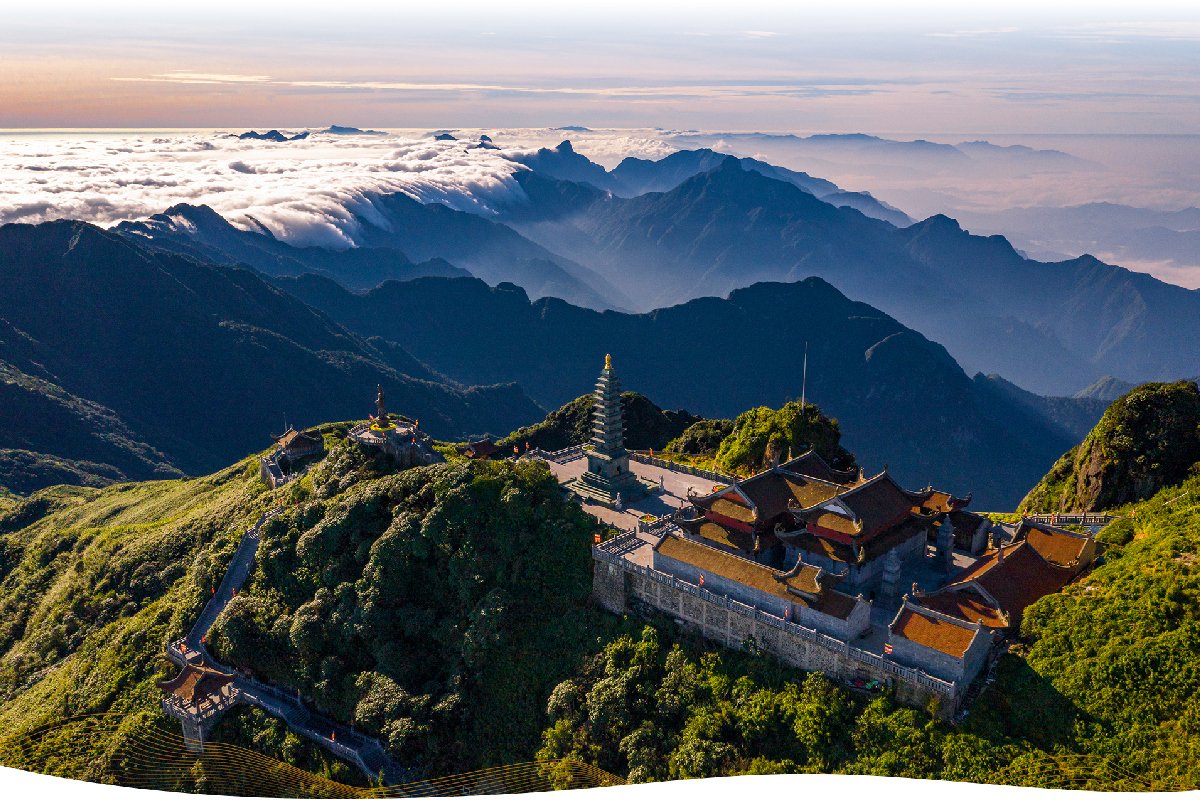
Standing at 3,147 metres, Fansipan is the highest peak in Vietnam, Laos, and Cambodia combined — and for many first-timers, reaching the summit is the single most memorable moment of their trip. You have two choices: the gruelling two-to-three-day trek through Hoàng Liên Sơn National Park (for serious hikers), or the spectacular Fansipan cable car, which whisks you to the upper station in about 15 minutes.
The cable car journey is extraordinary in its own right. You pass through four distinct ecological zones as the valley floor falls away beneath you, and on a clear day the panoramic views extend over 40 kilometres of cloud-wreathed ridgelines. At the summit, an ornate Buddhist temple complex awaits — home to Vietnam's largest bronze Buddha statue at 21.5 metres tall — alongside prayer wheels and incense smoke drifting through the cool mountain air.
"Standing above the clouds on Fansipan, with the whole valley spread below you, is one of those rare moments where time seems to stop entirely."
Practical note: Morning is the clearest time to ascend. Cloud cover often thickens by early afternoon. If you experience headaches or dizziness at altitude, descend promptly — Fansipan's summit is high enough to cause mild altitude sickness in some visitors.
Trek the rice terraces with a local guide
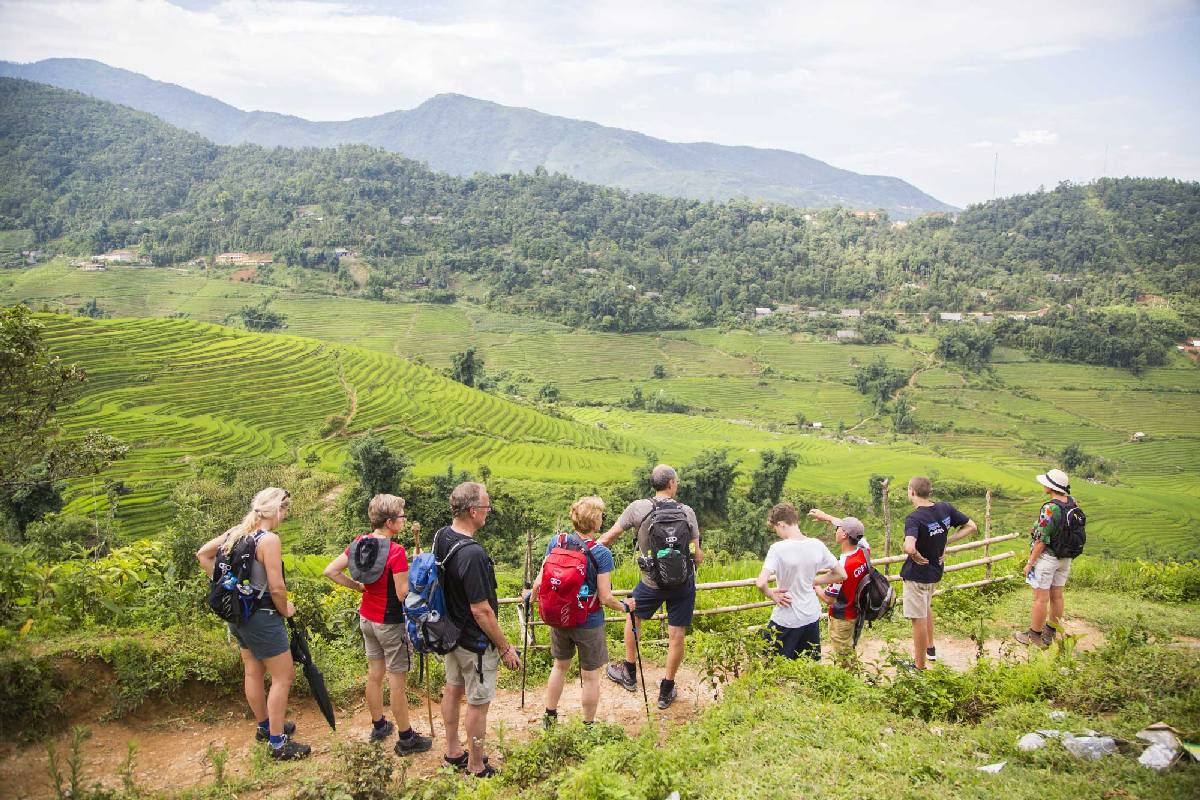
If Sapa has one unmissable experience above all others, it is trekking through the terraced rice fields of Mường Hoa Valley — the largest in Vietnam, spanning over 2,200 hectares southeast of town. The most popular routes wind through the villages of Lào Chải and Tả Văn, but a good local guide will take you off the well-worn paths into quieter hamlets where the pace of life feels centuries removed from the world below.
Hiring a local guide is strongly recommended — not only because most trails are unmarked and genuinely easy to get lost on, but because a knowledgeable guide transforms the experience. As you walk, they'll explain the significance of the terraced farming techniques passed down through H'mong families for over 300 years, point out medicinal plants growing alongside the path, and introduce you to weavers and farmers along the way. Reputable local operators such as Ethos, Sapa Sisters, and Nomad Trails are trusted by seasoned travellers and are well-versed in building treks to suit different fitness levels and timeframes.
Insider advice: Book your guide directly through a Sapa-based agency rather than through a Hanoi tour operator. Local guides offer a richer, more authentic experience — and your money goes directly into the village economy.
Discover the ethnic minority villages
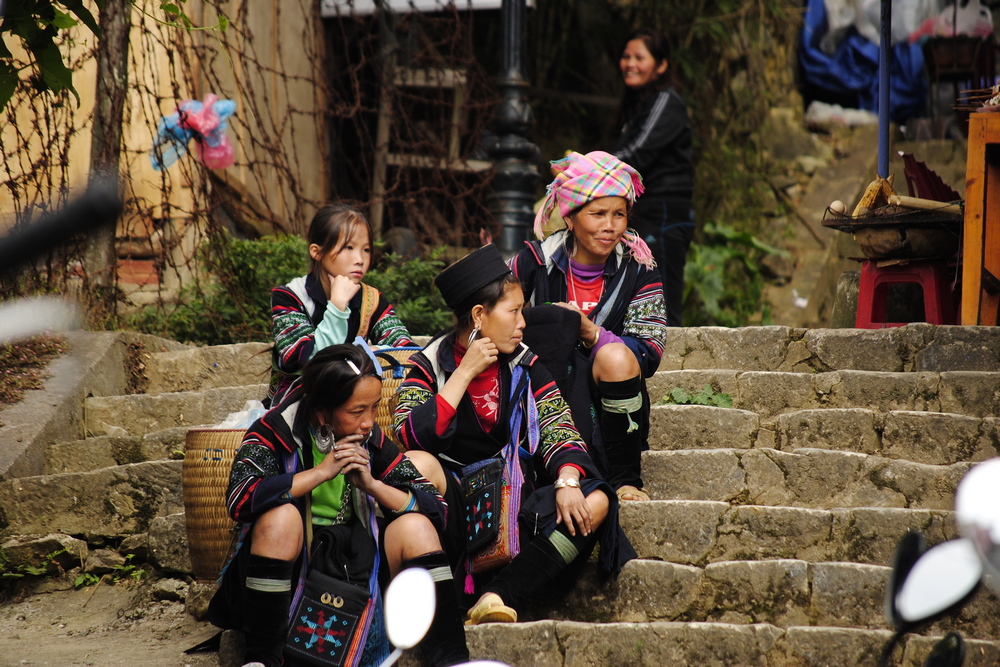
Sapa is home to a remarkable tapestry of ethnic communities — H'mong, Red Dao, Tày, Giáy, and Xa Phó peoples, each with their own distinct language, dress, and traditions. Spending time in their villages is one of the most quietly profound things you can do in northern Vietnam.
Cat Cat Village, just three kilometres from the town centre at the foot of Hoàng Liên mountain, is the most accessible introduction — stilt houses, traditional weaving demonstrations, a waterfall, and craft stalls line the route. For something deeper and more unhurried, Y Linh Ho village is home to Black H'mong communities who run indigo dyeing workshops where you can try your hand at the ancient craft. Tả Văn, further into the valley, offers the chance to stay overnight with a local family in a genuine homestay — waking up to mist-shrouded paddies and a home-cooked breakfast is an experience most first-timers cite as the highlight of their entire trip.
Eat like a highlander — Sapa's essential dishes
Sapa's mountain cuisine reflects its cool climate, its cultural diversity, and its deep relationship with the land. The food is hearty, warming, and utterly unlike anything you'll eat in lowland Vietnam.
Thắng Cố is the dish most closely associated with Sapa — an H'mong stew traditionally made from horse meat, bones, and offal, slow-cooked for hours with more than twelve mountain herbs including cardamom, lemongrass, and ginger. The rich, aromatic broth is an acquired taste, but one that locals swear by on cold evenings. Beyond Thắng Cố, look out for grilled corn and sweet potato sold by roadside vendors, black pork (a local breed raised on mountain herbs), and hearty pots of salmon hotpot — salmon from the cold mountain streams of the region is a Sapa speciality. The town also has a thriving coffee culture: seek out a café with a valley-facing terrace and linger over a cup of strong Vietnamese coffee as the mist rolls through the peaks below.
Where to eat: For authentic local food at honest prices, seek out restaurants busy with Vietnamese diners rather than those positioned along the main tourist strip. A local food tour with a knowledgeable guide is one of the best ways to discover the best family-run spots.
Beyond the trail: other highlights worth your time
Silver Waterfall (Thác Bạc) cascades dramatically down the Hoàng Liên Sơn slopes along National Road 4D and is most spectacular after summer rainfall. A bridge spans the falls for a classic photo opportunity. Nearby, Heaven's Gate at the top of Ô Quý Hồ Pass offers views across layered ridgelines that stretch toward the Chinese border — this is one of the finest viewpoints in all of northern Vietnam.
Sapa Stone Church, a French Gothic relic at the heart of town, is Sapa's most recognisable landmark and still holds services today. The Cầu Mây Walking Street around it comes alive each evening with lantern light, vendors selling local handicrafts, and the scent of grilled skewers — a perfect place to end the day.
For those who want to try something hands-on, craft workshops abound: learn traditional batik fabric dyeing, try H'mong embroidery, or join a cooking class with a local family and take home the recipes of the mountains.
Essential first-timer tips
Pack layers, always. Even in summer, Sapa evenings turn cold. A good windproof jacket is non-negotiable, and sturdy waterproof shoes are essential if you plan to trek — trails become slick and muddy after rain.
Carry cash. While hotels and larger restaurants may accept card payments, many village stalls, local eateries, and market vendors operate on a cash-only basis. ATMs are available in town but not in the surrounding villages.
Plan for at least three nights. Two days is enough to scratch the surface, but three or four nights allows you to trek into the deeper valleys, spend a night in a village homestay, and experience Sapa at a pace that lets the place actually settle into you.
Respect local customs. Always ask permission before photographing people. When visiting villages and homes, follow your guide's lead on etiquette. A small purchase from a local artisan — a hand-embroidered bag, a piece of indigo-dyed cloth — is a more meaningful souvenir than anything sold in town.
Plan your trip
Tell us about your plans and one of our specialists will plan a unique trip for you...
MAKE AN ENQUIRY