

There are trips you take because they get you somewhere — and then there are trips where the journey itself is the whole point. The short train ride from Da Lat Station to Trại Mát village is unmistakably the latter.
Stretching just seven kilometres through the misty Central Highlands, this is one of the most charming and unhurried rail rides in all of Vietnam. And for any visitor to Da Lat, it simply cannot be missed.
Step Back in Time at Da Lat Station
The adventure begins before the train even moves. Da Lat Railway Station — built by the French in 1938 — is one of the most beautiful colonial-era buildings in the country. Its canary-yellow façade, art deco arches, and three distinctive pointed rooftops make it feel less like a transit hub and more like something out of a storybook. Take your time here. Wander the platform, admire the tilework, and soak up the atmosphere of a station that once connected this mountain retreat to the coast below.
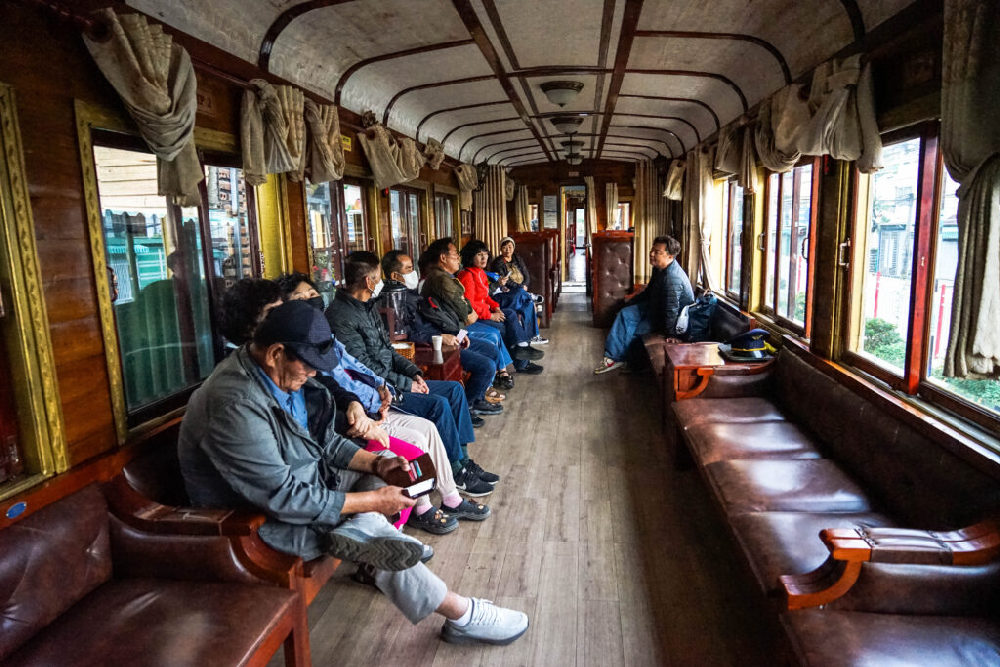
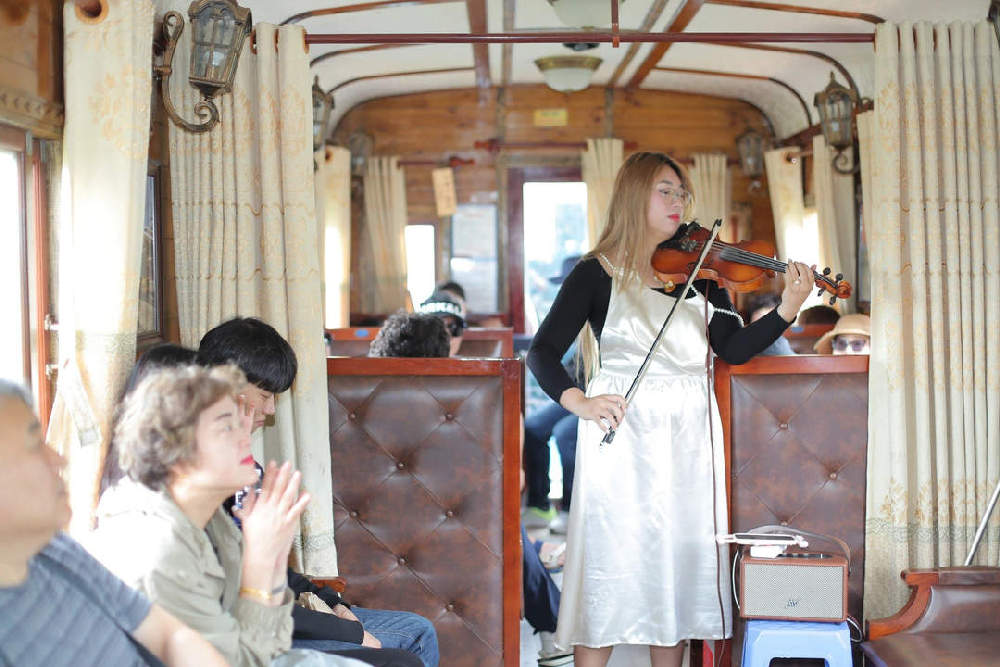
The train itself — a vintage diesel locomotive pulling a handful of refurbished wooden-and-wicker carriages — pulls away with a satisfying rumble. There is no high-speed rail ambition here; the locomotive ambles along at a leisurely pace that seems perfectly calibrated for daydreaming.
Pine Forests, Valleys, and Village Life
As the train leaves the station behind, the city gives way almost immediately to landscape. The route winds through undulating hills blanketed in pine trees — Da Lat's signature scent, that cool, resinous fragrance, drifts through the open windows. Beyond the glass, you'll spot terraced vegetable plots, clusters of wildflowers in yellow and violet, and the occasional farmhouse tucked into the hillside.
This is highland Vietnam at its most pastoral. The ride takes roughly thirty minutes in each direction, and the slow, swaying rhythm of the carriages makes it easy to understand why the French once called Da Lat their Petit Paris — there is something very European about rolling through cool, green countryside on a quiet train.
Arriving at Trại Mát
The destination, Trại Mát, is a small, relaxed village that rewards a gentle explore. Most visitors make straight for Linh Phước Pagoda, just a short walk from the station — and it is well worth the detour. This extraordinary Buddhist temple is adorned almost entirely in mosaics of shattered porcelain and glass, with dragons coiling up its towers in vivid, intricate colour. It is genuinely unlike anywhere else you will visit in Vietnam.
Back in the village, you can browse local produce markets, stop for a bowl of bánh căn (small rice cakes, a Da Lat speciality), and watch daily life unfold at a refreshingly unhurried pace before catching the return train back to the city.
Everything You Need to Know
- Route: Da Lat Railway Station → Trại Mát (and return)
- Distance: 7 km each way
- Journey time: Approx. 30 minutes each direction
- Departures: Several times daily — check the current schedule at the station
- Ticket price: Very affordable; tickets are purchased directly at the station
- Best time to go: Morning departures offer cooler temperatures and softer light through the pine forests
Why You Shouldn't Skip It
In a city full of lakes, flower gardens, and French villas, the train ride to Trại Mát stands apart because it offers something rarer: genuine slowness. There is no checklist to tick here, no landmark to photograph and move on from. It is simply you, a creaking vintage carriage, and one of the most quietly beautiful stretches of highland countryside in Southeast Asia rolling past your window.
Pack a light jacket — it is cooler than you expect — find a window seat, and let Da Lat's landscape do the rest.
Plan your trip
Tell us about your plans and one of our specialists will plan a unique trip for you...
MAKE AN ENQUIRY
Take a train ride from Dalat Train Station to Trai Mat in pictures



Ideas for experiencingDa Lat
Experiences you have as you travel often hold the longest memories. As part of their research trips, our specialists seek out authentic ways to get to know Japan, and the best local guides. These activities reflect some of their best-loved experiences.