
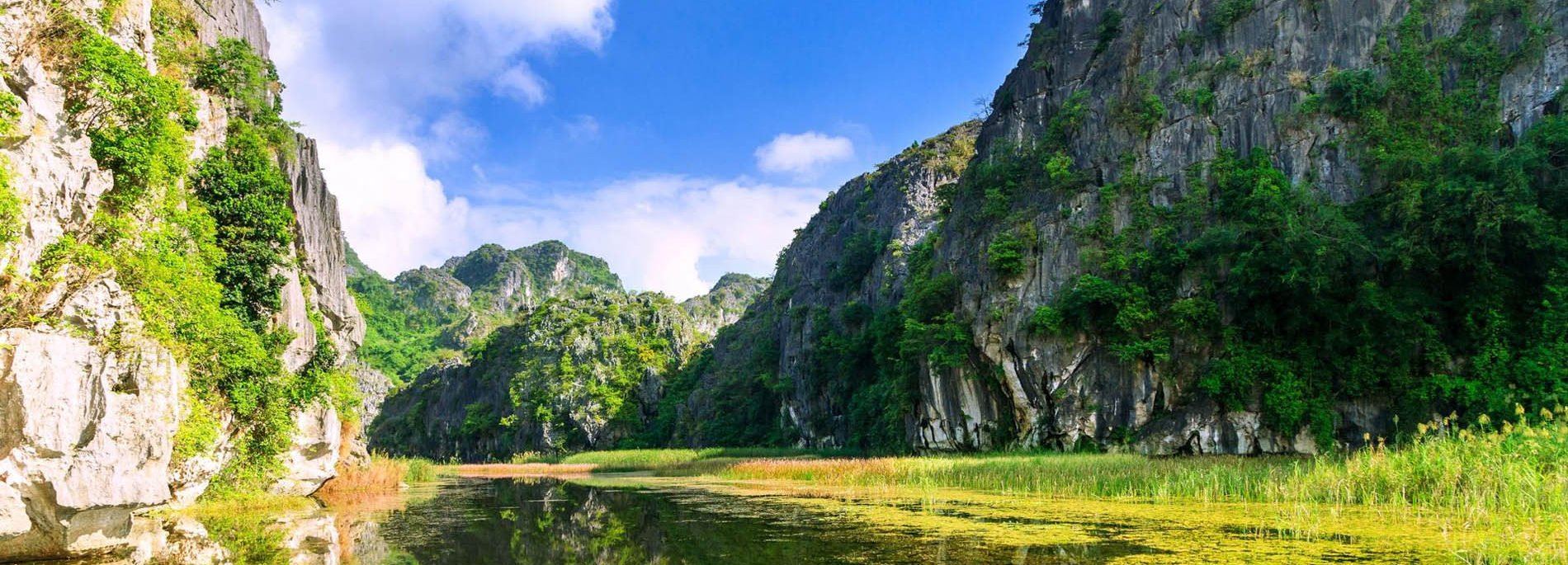
Visit Van Long Nature Reserve - Hidden Wetland Sanctuary
Stretching across more than 3,500 hectares of karst wetlands in Gia Vien District, Van Long is the largest inland wetland nature reserve in northern Vietnam. Designated as a protected area in December 2001, it is now also a Ramsar Wetland of International Importance — a globally recognised distinction shared with such legendary landscapes as the Florida Everglades.
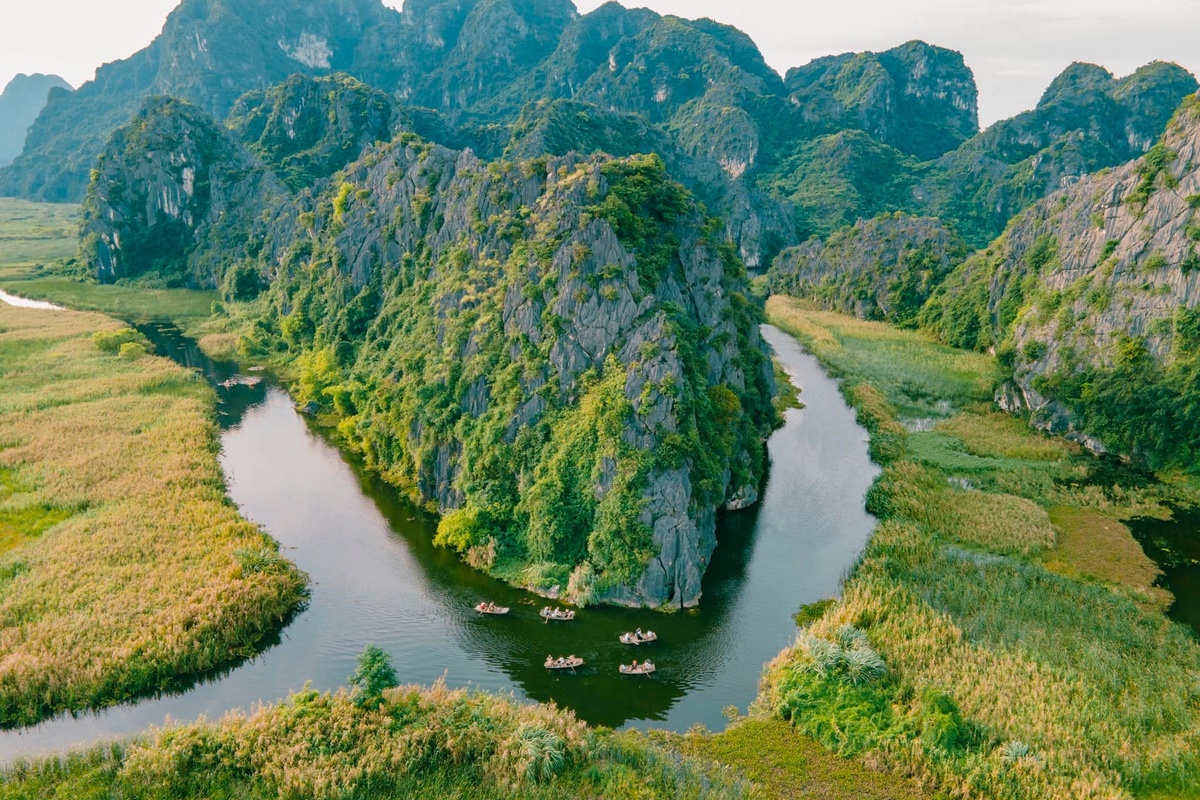
"Locals call it the 'Halong Bay on land' — and once you drift beneath limestone towers rising sheer from mirror-flat water, you'll understand exactly why."
Unlike the busier Tam Coc or Trang An circuits, Van Long remains refreshingly unhurried. The reserve is less visited, more affordable, and far more intimate — a place where nature still holds the upper hand, and the silence is only broken by the dip of an oar or the distant call of a stork heading for its roost.
Wildlife to watch for
Van Long is one of the last strongholds for several critically endangered species. Keep eyes — and binoculars — trained on the cliffs.
Delacour's Langur: Critically endangered primate, endemic to Vietnam
72+ Bird Species: Egrets, herons, storks, open-bills & long-tailed jacanas
Aquatic Flora: Delicate water plants visible through crystal-clear shallows
The best chance of spotting the rare Delacour's langur — listed among the world's 25 most endangered primates — is in the late afternoon, between 3:30 and 4:30 pm, when the troops emerge from cave shelters on the limestone cliffs to forage. Flocks of storks wheel overhead at the same hour, heading toward the marshes and rice paddies. The light at this time of day is extraordinary.
What to do
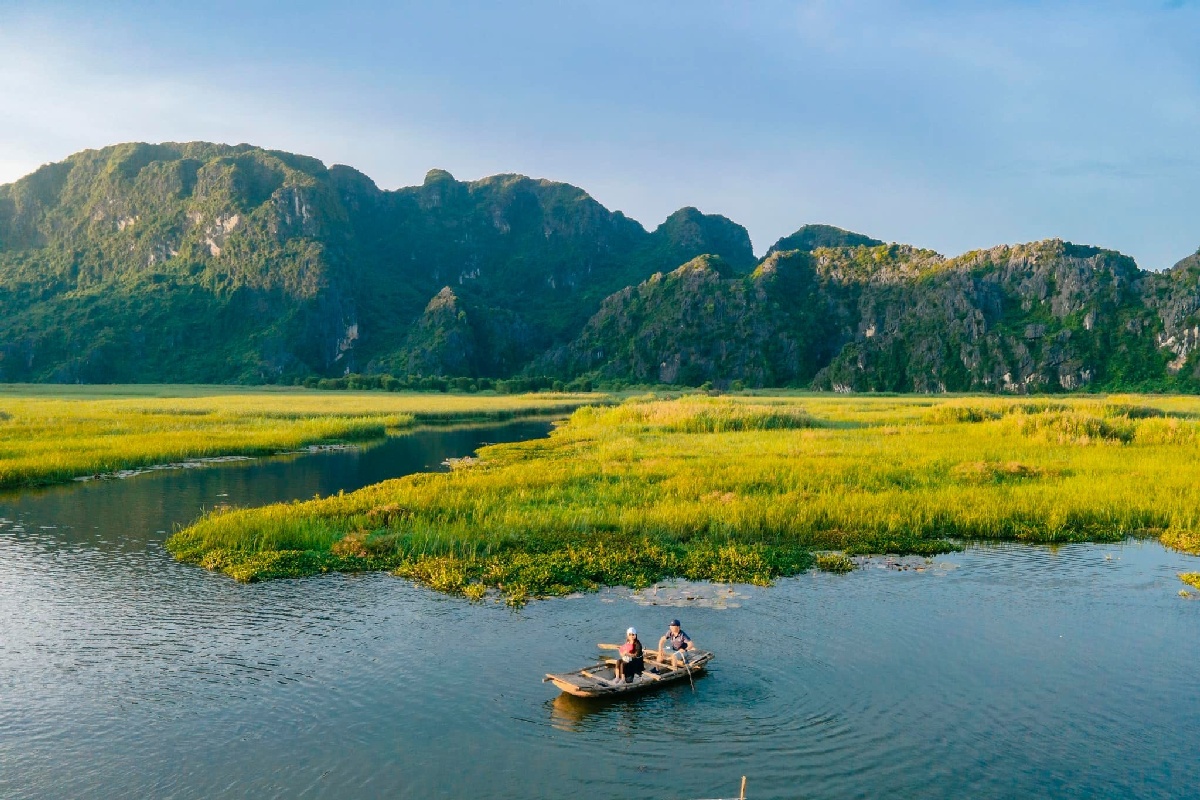
Bamboo boat tour: The essential Van Long experience. Local rowers — some using only their feet — guide traditional flat-bottomed bamboo boats through the waterways, passing beneath towering karst peaks and through Hang Ca cave, half-submerged and 250 metres long.
Bird watching: With 72 resident and migratory bird species, Van Long is one of northern Vietnam's finest birdwatching destinations. Arrive early in the morning or at dusk for the best sightings along the reed beds and open water.
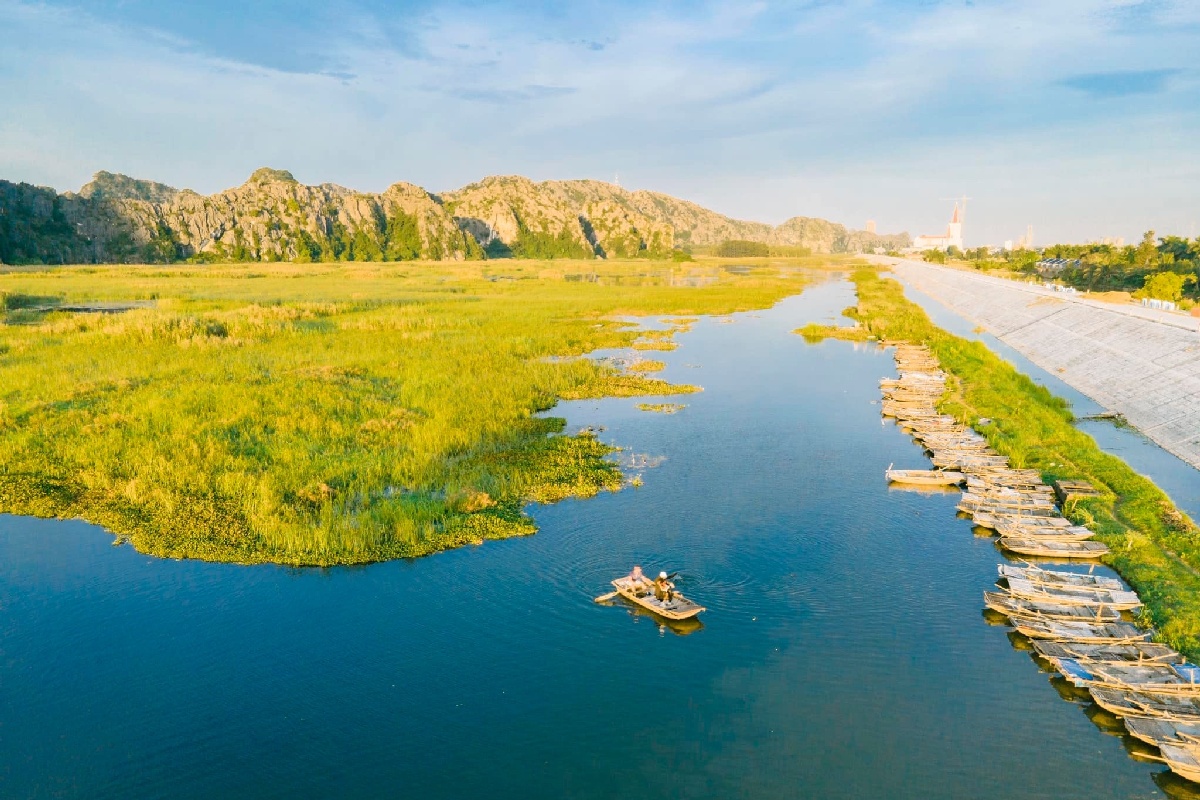
Cycling the dike road: A long straight road runs alongside the reserve, offering sweeping views across the wetlands. Rent a bicycle and pedal past rice paddies, traditional villages, and the full panorama of limestone scenery at your own pace.
Temple trail: The surrounding villages are home to ancient spiritual sites including Dich Long Temple — a relic of the Dinh dynasty — Mau Temple, and Thanh Son Pagoda, noted for a 600-year-old gold apple tree.
When to go & how to get there
The dry season, from November to April, is the ideal window — cooler temperatures make the boat trip comfortable, and migratory birds arrive in large numbers to feed and nest among the reeds. Mornings and late afternoons are the golden hours: softer light, quieter water, and the highest chance of wildlife encounters.
Van Long sits about 17 km northeast of Ninh Binh city, reachable in 30 minutes by motorbike or taxi along scenic country roads. From Hanoi, the journey takes around 90 minutes by car or 2 hours by train to Ninh Binh station, then onward to the reserve.
💡 Insider tip: Arrive for the afternoon boat (3:30–4:30 pm) rather than the morning rush — the golden light on the water is exceptional, and the langurs and storks tend to appear just as the day cools. Bring binoculars, cash in Vietnamese Dong, and a small tip for your rower (2–3 USD is customary, as entry prices are deliberately low).
Plan your trip
Tell us about your plans and one of our specialists will plan a unique trip for you...
MAKE AN ENQUIRY
Visit Van Long Nature Reserve in pictures

Ideas for experiencingNinh Binh
Experiences you have as you travel often hold the longest memories. As part of their research trips, our specialists seek out authentic ways to get to know Japan, and the best local guides. These activities reflect some of their best-loved experiences.