
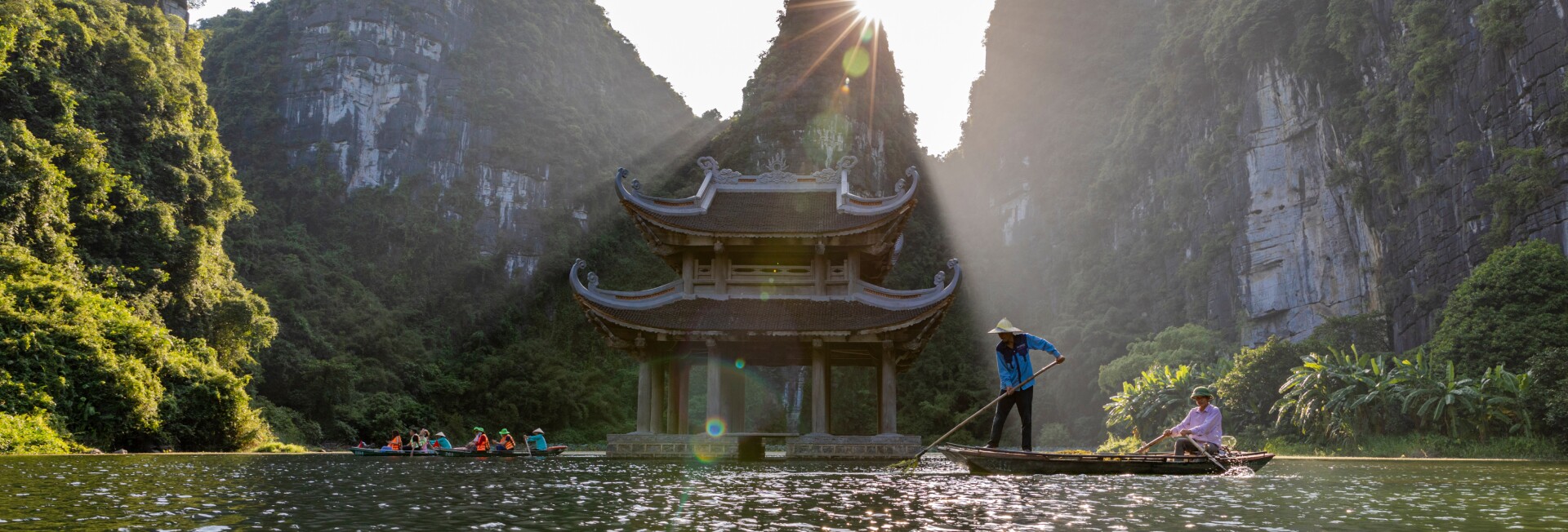
Visiting the Trang An Landscape Complex (UNESCO Heritage Site)
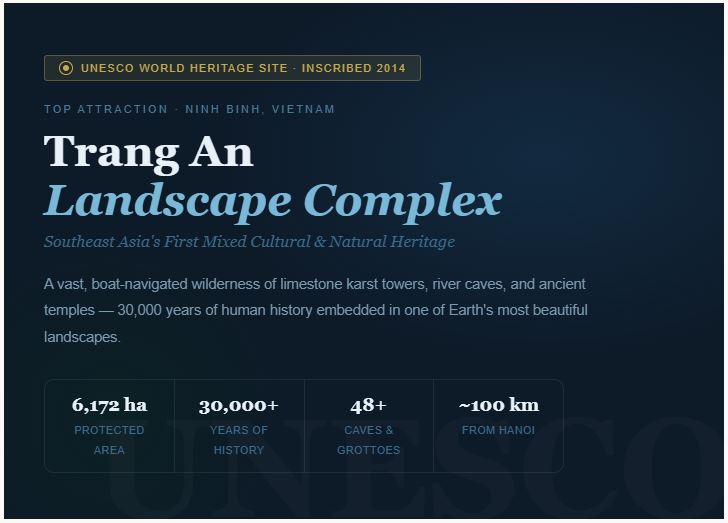
Why Trang An is unmissable
On 23 June 2014, at the 38th session of the UNESCO World Heritage Committee in Doha, Trang An became the first site in Southeast Asia to receive recognition as a Mixed Cultural and Natural World Heritage Site — a rare dual distinction held by fewer than 40 places on Earth. It was not a diplomatic courtesy. UNESCO's evaluators described the tower karst landscape here as "among the most beautiful and awe-inspiring areas of its kind anywhere on Earth."
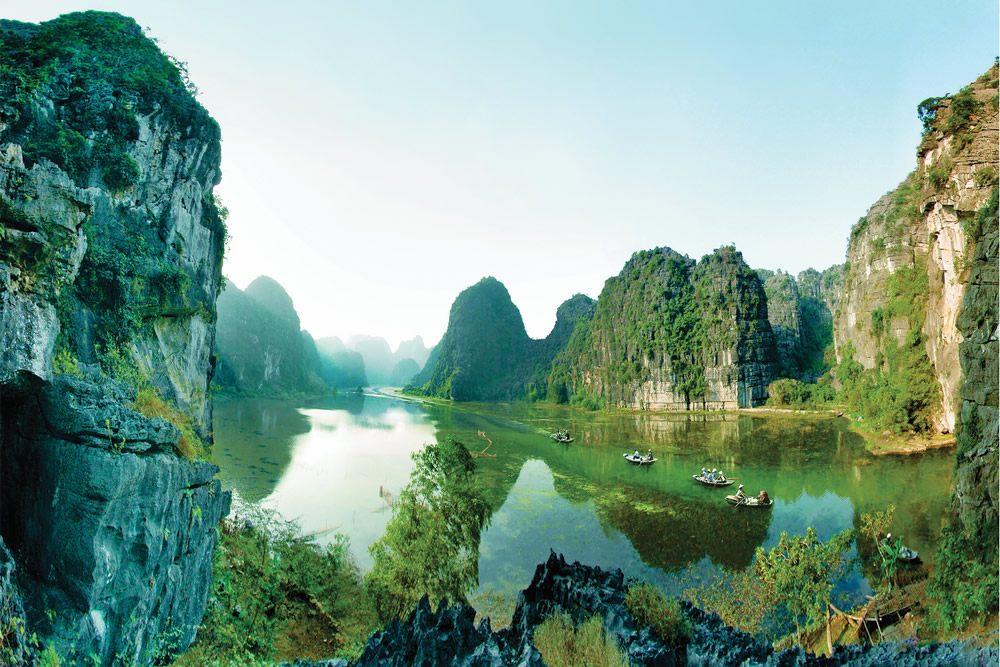
What makes Trang An exceptional — and genuinely different from every other karst destination in Vietnam — is the layering. Beneath the surface spectacle of cliff-enclosed valleys, emerald waterways, and cave-pierced mountains lies a 30,000-year narrative of human adaptation: prehistoric hunter-gatherers who survived repeated sea-level rises by retreating to elevated caves, Neolithic and Bronze Age communities who left behind tools and middens in the sediment, and the Đinh emperors of the 10th century who recognised this labyrinth of natural walls as the perfect site for Vietnam's first unified capital at Hoa Lu.
"To glide through Trang An by boat is to travel through geological deep time and human history at once — the caves above your head were sea-level refuges for Ice Age hunter-gatherers; the temples ahead were built by Vietnam's founding dynasty."
Today the complex encompasses three protected zones — the Hoa Lu Ancient Capital, the Trang An–Tam Coc–Bich Dong Scenic Landscape, and the Hoa Lu Special-Use Primary Forest — knitted together by waterways, rice paddies, and the most intact stretch of limestone rainforest in northern Vietnam.
Three UNESCO criteria — one landscape
Trang An was inscribed under three outstanding criteria, each of which stands alone as a reason to visit.
Cultural landscape
The most significant locale in Southeast Asia showing how early humans interacted with, and adapted to, a dramatically changing natural landscape over 30,000 years — including repeated submergence by the sea after the last Ice Age.
Natural beauty
A tower karst landscape ranked among the most beautiful on Earth. Steep cliffs, cliff-enclosed valleys, subterranean waterways, and lush tropical rainforest combine into scenery of extraordinary aesthetic power.
Geological record
An outstanding example of humid tropical tower karst in its final stages of geomorphic evolution — a geological textbook in limestone, with erosion notches, marine deposits, and cave systems recording ancient sea-level changes.
The three boat routes
The only way to explore Trang An's inner waterways is by flat-bottomed bamboo boat, rowed by local residents — many of them using only their feet to work the oars. Each route takes 2–3 hours and passes through a different combination of caves, valleys, and cultural sites. Boats carry a maximum of four passengers.
The Cave Route (Most caves)
The most geologically dramatic option, stringing together the greatest number of grottoes. Glide through the pitch-dark passages of Sang Cave (where light spills in through narrow ceiling gaps), the vast chambers of Toi (Dark) Cave, and the legendary Nau Ruou Cave — said to have been used by Đinh dynasty soldiers to brew rice wine. The route offers the most intense experience of the karst's subterranean character.
The Balanced Route (Best for first-timers)
The most popular and most recommended for first-time visitors — an even-handed mix of cave passages, open karst valleys, and temple stops that gives a comprehensive sense of what makes Trang An unique. The route includes Phu Khong, Sinh Duoc, and May Bac caves, plus a stop at Trinh Temple, one of the most atmospheric spiritual sites in the complex, tucked beneath overhanging cliffs and approached by boat across still water.
The Culture Route (History focus)
The deepest immersion in Trang An's dynastic and spiritual heritage. This route visits Hoa Lu Ancient Capital — site of the palaces of Emperor Đinh Tiên Hoàng, founder of Vietnam's first independent state — alongside Bai Dinh Pagoda complex (the largest Buddhist pagoda in Vietnam) and a series of cave shrines still active with incense and worshippers. The ideal choice for visitors with a particular interest in Vietnamese history and Buddhism.
Beyond the boat tour
Hoa Lu Ancient Capital
Vietnam's capital in the 10th–11th centuries under the Đinh and Lê dynasties. The remaining temples of Đinh Tiên Hoàng and Lê Đại Hành — surrounded by limestone ramparts — are among the most evocative historic sites in northern Vietnam.
Mua Cave & Peak
A 500-step climb up a dragon-spine ridge rewards with the most-photographed panorama in Ninh Binh: a 360° view of flooded rice paddies, karst towers, and the Trang An waterways spread out below like an aerial map.
Bich Dong Pagoda
A three-tiered pagoda built at the foot, middle, and summit of Bich Dong mountain — connected by stone staircases and cave shrines. Cross the lotus pond on a stone bridge, duck through cave chambers fragrant with incense, and emerge above the treeline for views over the valley.
Cycling the heritage perimeter
Flat roads and well-maintained paths connect the key sites of the complex. Rent a bicycle and pedal between temples, rice fields, and viewpoints at your own pace — the most rewarding way to understand the scale and variety of the landscape.
Plan your visit
Getting there
- From Hanoi: approx. 90 min by car or 2 hrs by train to Ninh Binh station, then 7 km west to Trang An wharf. The wharf is located 3 km south of Hoa Lu Ancient Capital and 7 km from Ninh Binh City.
Tickets & hours
- Entry + boat ticket: 250,000 VND per person (approx. $10 USD). Open daily from 7:00 AM – 5:30 PM. Boats depart continuously from the official pier. Cash (VND) recommended; bring small bills for tips.
Best time to visit
- September–November: golden rice harvests frame the waterways in amber. March–April: wildflowers on the cliffs, cooler temperatures. Avoid: public holidays and major Vietnamese festivals when boat queues can extend over an hour.
What to bring
- Sun protection and a light rain jacket (the caves can be cool). Comfortable flat shoes for temple walks. A small backpack — no large luggage on the boats. Camera or phone in a waterproof case if possible. A tip (20,000–50,000 VND) for your rower.
Insider tip: Arrive at the pier by 8:00 AM to beat the midday crowds and catch the soft morning light on the water — the single most impactful factor in how the landscape photographs and feels. If you arrive after 10 AM on a weekend, expect to queue. Route 2 is the best default for most visitors; first-timers rarely regret it. September and October are the finest months overall: ripe rice fields turn the buffer zone golden, and visitor numbers are lower than the spring peak.
Combine with nearby attractions
- Tam Coc: 9 km · 20 min · Quieter rice-field boat trip.
- Van LongNature Reserve: 25 km · 35 min · Wetland wildlife reserve.
- Bai Dinh Pagoda: 12 km · 20 min · Largest pagoda in Vietnam.
- Cuc Phuong: 45 km · 1 hr · Vietnam's oldest national park.
Plan your trip
Tell us about your plans and one of our specialists will plan a unique trip for you...
MAKE AN ENQUIRY
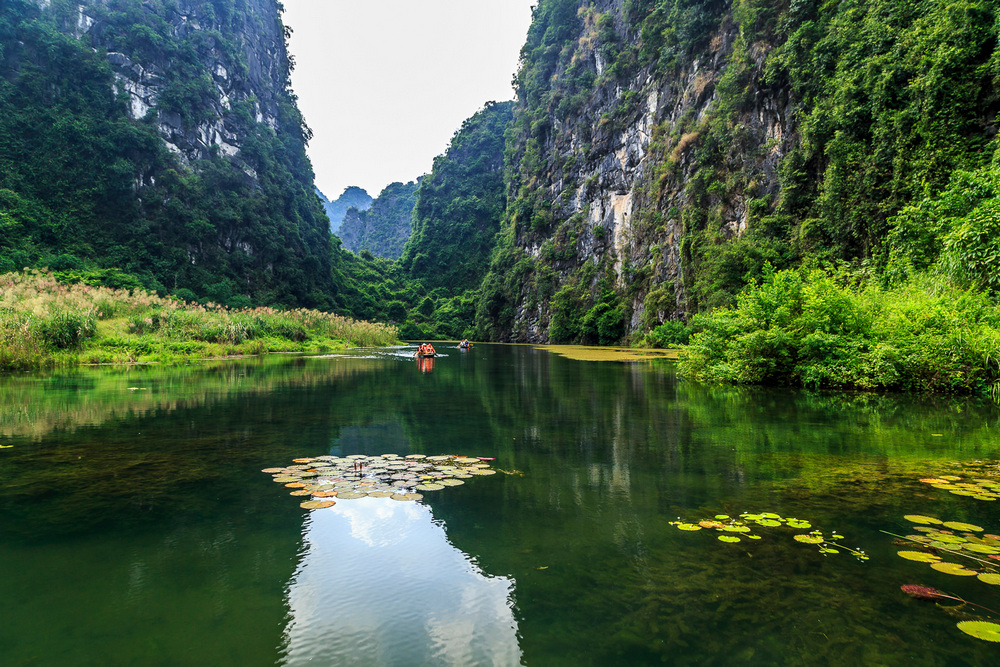
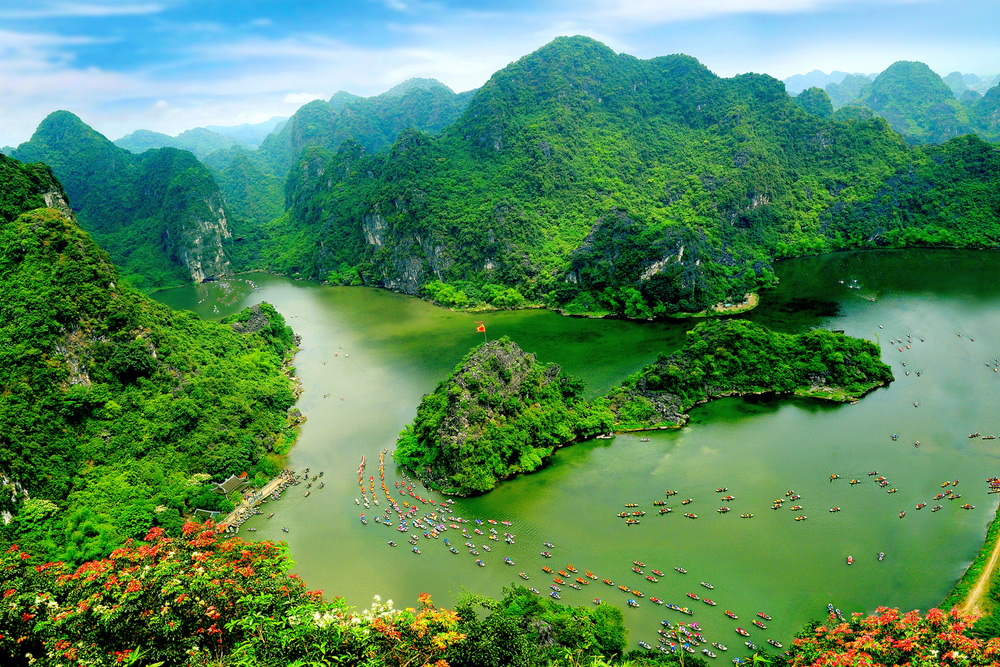
Visiting the Trang An Landscape Complex (UNESCO Heritage Site) in pictures

Ideas for experiencingNinh Binh
Experiences you have as you travel often hold the longest memories. As part of their research trips, our specialists seek out authentic ways to get to know Japan, and the best local guides. These activities reflect some of their best-loved experiences.